food photographer cost · food photography pricing 2026 · food photographer rates US UK · ai food photography alternative · restaurant photographer price
Food Photography Cost 2026: Real Prices & Rates
Food photography cost in 2026: real hourly rates for NYC, LA, London, Paris and Madrid, hidden fees, and when AI cuts the cost.
If you run a restaurant, café or food truck, sooner or later you ask the same question: how much does food photography cost? The short answer isn't comforting: between $500 and $5,000 per session in the United States, or £400 and £1,500 per day in the United Kingdom, before extras. The long answer is more useful — and more interesting — for deciding what to do with your marketing budget.
In this article we compile real 2026 industry pricing — hourly rates in major US, UK and EU cities, hidden costs that almost no photographer warns you about upfront, what a professional session actually delivers, and the real cases where it's worth paying for one. All figures come from public photography marketplaces (Cronoshare, Bidvine, Bark, Thumbtack) and published studio rates. FoodyFocus is a Barcelona-based AI food photography platform that works with hundreds of restaurants globally each month, so we have a direct view of where pricing actually lands in 2026.
At the end of the article you'll also find an honest comparison between traditional photography, phone shots, and modern AI tools like FoodyFocus.
How much does food photography cost exactly in 2026?
The price of a professional food photographer depends on three main factors: the photographer's experience (generalist freelancer vs. food specialist vs. studio with art direction), the city (New York, London and Paris are dramatically more expensive than mid-tier markets), and the extras you need (food styling, props, commercial rights, advanced retouching).
Real 2026 price ranges based on public marketplace data:
- Generalist freelance photographer: $200–$500 in the US, £150–£350 in the UK, €150–€350 in the EU for a 2–3 hour shoot. Typically delivers 10–20 edited images. Affordable but rarely specialised in food.
- Food photography specialist: $800–$2,000 in the US, £400–£900 in the UK, €400–€900 in the EU for a half-day session (4 hours). Includes basic food styling and 20–40 edited images. This is the most common tier for restaurants that invest seriously in visuals.
- Studio with art direction: $2,500–$8,000 in the US, £1,500–£5,000 in the UK, €1,500–€5,000 in the EU for a full production day. Includes food stylist, art direction, multiple angles and formats, professional retouching. Chosen by brands and chains with serious budgets.
- Per-image pricing: $50–$200 per retouched image in the US. Most flexible option when you only need a few hero shots, most expensive per unit.
These figures are before sales tax/VAT and before extras. A session quoted at $800 base can easily reach $1,400 once you add food styling, props, travel, and extended commercial rights.
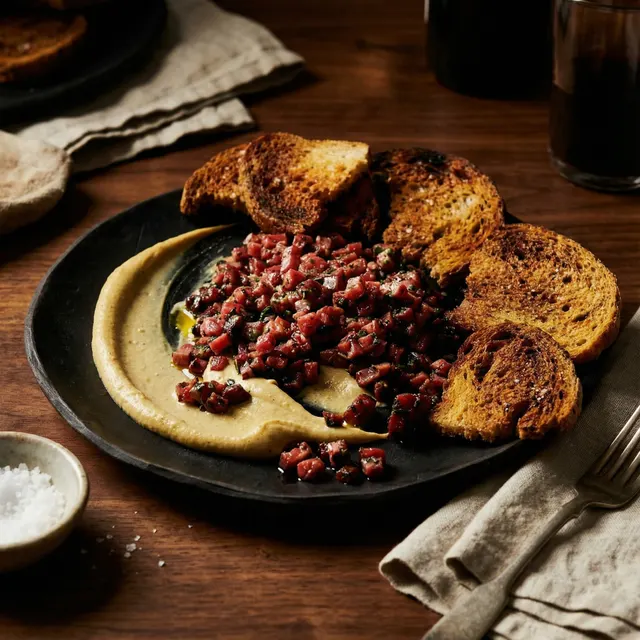
Rate breakdown by city: NYC, LA, London, Paris, Madrid
As with any professional service, city pricing matters a lot. These are the hourly rates a food photographer typically charges in major cities, based on 2026 marketplace data:
- New York City: $150–$500/hour. The most expensive market in the US. A half-day session (4 hours) costs $600–$2,000 in fees alone, before extras. Some of the world's best food photographers are based here, so quality is also exceptional.
- Los Angeles: $120–$400/hour. Slightly below NYC but with a heavy specialisation in lifestyle and Instagram-ready content. A half-day shoot runs $500–$1,600.
- Chicago, Miami, Austin: $80–$250/hour. Major US food cities with strong photographer scenes but more competitive pricing. Half-day sessions typically $350–$1,000.
- London: £80–£200/hour. Most expensive UK market by a wide margin. A half-day session runs £350–£800. Strong food photography tradition driven by Michelin restaurants and Time Out coverage.
- Manchester, Edinburgh, Bristol: £50–£120/hour. UK regional markets with significantly more competitive rates. Half-day sessions £200–£500.
- Paris: €70–€180/hour. The French capital combines high prices with extremely strong food photography culture. Half-day sessions typically €300–€720.
- Lyon, Marseille, Bordeaux: €45–€100/hour. French regional cities with more accessible rates. Half-day sessions €200–€400.
- Madrid: €60–€150/hour. Spain's most expensive market. Half-day shoots €240–€600.
- Barcelona: €50–€100/hour. Slightly below Madrid but with deep Mediterranean food photography specialisation.
- Berlin, Amsterdam, Milan: €60–€150/hour. Mid-tier major European markets. Half-day sessions €240–€600.
These prices are photographer fees only. They do not include sales tax/VAT, travel beyond city centre, or extra production costs like a dedicated food stylist or specific props.
Hidden costs that hardly anyone mentions before signing
The gap between the initial quote a photographer sends you and the final invoice can be 30%–60%. Not because they're trying to upsell — most are honest — but because production extras are so standard in food photography that many professionals don't mention them until shoot day. The most common ones:
- Food styling ($150–$500): If you want the dish to look perfect, you almost always need a food stylist. This is a separate professional from the photographer who prepares and composes the dish for camera: fake ice tricks, glycerin for shiny drops, tweezers for precision parsley placement. Without this, photos can look flat or unappetising, especially for ice cream, beverages and desserts.
- Props and tableware ($100–$300): Napkins, the right tablecloth, glasses, special cutlery, backgrounds. If your venue doesn't have the "brand image" tableware you want, you have to rent or buy props. For a full-menu shoot, this can be a significant line item.
- Travel ($50–$200): If your restaurant is outside the city centre or the photographer needs to travel from another city, this is billed. For hotel or destination shoots it can easily reach $300–$500.
- Advanced retouching ($50–$200 per image): Base pricing usually includes basic retouching — colour, exposure, cropping. If you need complex compositing, background removal, or swapping the plate the dish is served on, advanced retouching is billed separately.
- Extended commercial rights ($100–$500): Most photographers grant you image usage for your menu, website and social media by default. But if you'll use the photos in paid advertising (Meta Ads, Google Ads, billboard, packaging), they usually charge an extended commercial licence.
- Sales tax / VAT: Forgotten in almost every initial quote. In the US 5–10% sales tax depending on state; in the UK 20% VAT; in the EU 19–21% VAT. On an $800 session, that's another $40–$170.
- Revisions and reshoots: If after reviewing the images you want a second session, expect to pay 70%–100% of the original session price.
The result: a session originally quoted at $800 can easily reach $1,400–$1,800 once you add extras and taxes. It's important to request a detailed quote with every line item before signing.
What does a professional food photography session include?
To give you a realistic picture of what you receive for your investment, here's a typical breakdown of a half-day session (~4 hours) with a food-specialised photographer:
- Before the session: Briefing meeting (in-person or video call) to understand your brand, your style, and the dishes to be photographed. Some photographers also do a technical site visit.
- Shoot day: 3–5 hours at your restaurant. The photographer sets up lighting, builds the set, photographs each dish from multiple angles and compositions, adjusts white balance on the fly. Meanwhile, your kitchen prepares dishes in the right order (ice cream and cold items always go last).
- Post-production: 1–2 weeks. The photographer selects the best shots, retouches them (colour correction, contrast, blemish removal, cropping) and exports in the formats you need: print-resolution, web-optimised, square crops for Instagram, etc.
- Delivery: Online gallery (WeTransfer, Dropbox, Pixieset) or external drive. Usually includes 15–40 final images depending on the package booked.
- Rights: By default, commercial usage for your own business (menu, website, social, delivery platforms like Uber Eats and DoorDash). Does not include resale to third parties or mass advertising licences, which are contracted separately.
Total time from first contact with the photographer to images live on your digital menu: 2–4 weeks. This matters because it explains the real bottleneck of professional photography — not just the cost, but the speed.
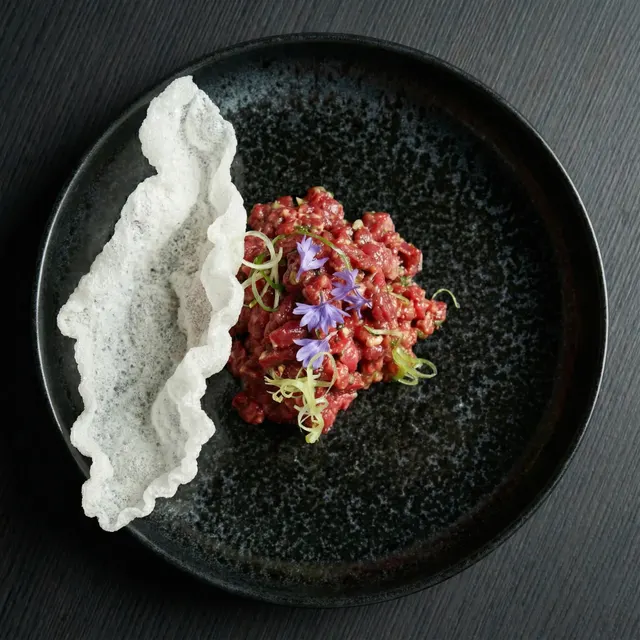
Comparison: professional photographer vs. AI vs. phone photo
You know the prices. Now the key question: which option gives the best cost-benefit ratio for your restaurant? Honest comparison of the three real options every restaurant operator has in 2026:
| Option | Average cost | Turnaround | Quality | Scalability |
|---|---|---|---|---|
| Phone photo (DIY, no retouch) | $0 | 5 min/photo | ★★ — poor/average | High volume but low conversion |
| FoodyFocus (AI) | €19/month (30 photos) | 30–60 sec/photo | ★★★★ — very good | Very high, no marginal cost |
| Professional photographer | $800–$2,000/session | 2–4 weeks | ★★★★★ — optimal | Low, each session is new investment |
Practical takeaway: phone photos without retouching are free but convert poorly (delivery listings with mediocre photos can receive 60% fewer orders), professional photography is optimal but slow and expensive (you can't afford a session every time you change the menu), and AI is the smart middle ground for the day-to-day operations of a restaurant.
This doesn't mean AI replaces the photographer in every scenario. It means for 90% of a restaurant's daily visual needs — updating the digital menu, uploading photos to Uber Eats, keeping Instagram active, refreshing the lunch special — AI covers the work at a fraction of the cost and time.
When is hiring a food photographer actually worth it?
Let's be honest: there are situations where a professional food photographer is still the best choice, even in 2026. The five scenarios where the investment makes clear sense:
- New restaurant opening or complete rebrand: If you're launching a new brand, you need an "anchor" image library with editorial-grade quality. A $1,500–$3,000 session will give you material for 1–2 years of marketing.
- Press, food guides and PR material: If you'll appear in Michelin, Time Out, Bon Appétit, Eater or any food publication, the images must be top-tier. Not the moment to save money.
- High-budget paid campaigns: If you'll invest $5,000+ in Meta Ads or out-of-home advertising, your creative needs to match. CTR difference between an optimal photo and just a good one can be 30–50%.
- Major seasonal menu launch: Complete menu refresh every 6 months for star dishes. The investment amortises over the season's traffic.
- Restaurants with strongly visual brand positioning: Fine dining, restaurants with custom branded tableware, visually sophisticated concepts where the plate is part of the narrative.
For everything else — and it's the vast majority — AI photography is the smart option. Especially for:
- Daily lunch specials: Change every day. Impossible to justify a photographer's cost.
- Delivery platform updates (Uber Eats, DoorDash, Deliveroo, Just Eat, Glovo): Apps require specific formats and frequent updates. Impossible to scale with a photographer.
- Social media content: Instagram, TikTok and Facebook need constant volume. One professional session a year doesn't cover the need for 4–5 weekly posts.
- Seasonal specials and limited-time items: On the menu for 2–3 weeks. Don't justify a session.
- Drinks menu and cocktails: Drinks change with trends and seasons. Refreshing the photos monthly with AI makes far more sense.
The most efficient model we see in restaurants that manage their visual brand well: 1–2 professional sessions a year for anchor material + FoodyFocus for the day-to-day. It's what the food marketing industry now calls the "hybrid model": the best of both worlds.
The AI alternative: FoodyFocus, professional photos from $20/month
FoodyFocus is an AI food photography tool built specifically for restaurants. We founded the company in Barcelona because we saw a clear problem: small and medium restaurants can't afford a professional photographer every time they update the menu, but unedited phone photos convert poorly on delivery apps and Google Maps.
How the full process works, step by step:
- Upload 3 photos of your restaurant interior. The AI learns your ambience, lighting and aesthetic. You only do this once.
- Upload a phone photo of the dish you want to photograph. Any modern smartphone works. You just need the dish to be clearly visible.
- Choose a style from the 9 available: fine dining nighttime, natural daylight, studio precision, fast casual energy, cozy indoor warmth, sunset glow, delivery-app composition (optimised for Uber Eats and DoorDash), macro detail, bright artistic café.
- In 30–60 seconds you receive a professional image of your real dish in your real restaurant. Ready to download.
Generated images are delivered already sized for the major delivery apps: Uber Eats (1200×960 px), DoorDash (1200×900 px), Deliveroo (1920×1080 px), Just Eat (1200×800 px) and Glovo (1000×1000 px). No manual resizing. And all come with full commercial rights: the images are yours to use without limits on menus, social, delivery, advertising and any other channel.
Real annual cost comparison: photographer vs. FoodyFocus
To understand the real impact on your annual budget, look at this example based on a mid-sized restaurant that updates visual content regularly:
- "All photographer" model: 4 sessions/year at $1,200 = $4,800 + tax = ~$5,300 annually. Result: 60–120 images that become outdated as soon as the menu changes.
- "All AI with FoodyFocus" model: Basic plan €19/month × 12 = ~$245 annually. Result: 360 professional images at whatever frequency your restaurant needs.
- Hybrid model (recommended): 1 professional session/year ($1,400) + FoodyFocus €19/month ($245) = ~$1,645 annually. Best of both worlds.
Savings of the "all AI" model versus the "all photographer" model: 95%, with more images and higher update frequency. For many restaurants, this is the difference between maintaining a polished visual brand and getting stuck with amateur photos.
If you want to try FoodyFocus without commitment, the Free plan includes 3 trial images, no credit card required. The fastest way to compare quality against any photographer's quote. See all plans and pricing.
Frequently asked questions about food photography pricing
What's the minimum price for food photography in the US?
The realistic minimum price for a professional food photography session in the US is $300–$500, hiring a generalist freelance photographer for a 2–3 hour shoot in a mid-tier city like Austin, Nashville or Portland. Below that, you'll find amateurs and students, which can work for very basic needs but not for serious commercial photography.
How much does a food photography session cost in London?
A typical food photography session in London in 2026 costs between £500 and £1,500 with a food specialist, before VAT and extras. Hourly rates run £80–£200 depending on the photographer's experience and reputation. Studios with art direction can reach £2,500–£5,000 for a full production day.
How much do photographers charge per retouched food image?
The price per retouched food image from a professional in 2026 is $50–$200 in the US or £40–£150 in the UK, depending on retouching level. If the dish is already photographed and only post-production is needed, prices can drop to $30–$60. A retouched photo with complex compositing (background swap, element removal, multi-shot fusion) can reach $200–$400.
Why is food photography more expensive than corporate photography?
For three main reasons: (1) it requires specialised technical knowledge of food lighting — plates shine and reflect differently from people and products; (2) post-production is more complex because you must maintain realistic textures and colours; (3) production requires food styling, which is a separate craft. That's why a good food photographer charges 20%–40% more than an equivalent corporate photographer.
Are AI-generated images legal for commercial use?
Yes, completely. Images generated with FoodyFocus include full commercial rights by default: you can use them on your digital menu, website, social media, delivery platforms (Uber Eats, DoorDash, Deliveroo, Just Eat, Glovo), paid advertising campaigns and print materials with no additional limitations. The photos are yours, not FoodyFocus's.
Can a single professional photo cost more than a month of FoodyFocus?
Yes, and it's the norm. A single retouched image from a professional photographer costs around $50–$200. FoodyFocus's Basic plan costs €19/month and includes 30 images. Meaning with FoodyFocus you pay less for an entire month of image production than for one photo from a traditional photographer. It's the math that's led many restaurants to switch models.
Conclusion: ask the right question
The question isn't "how much does a food photographer cost?". The right question is: "what do I need to achieve with my images, and what combination of tools best meets that need at the lowest cost?". For most restaurants we know, the modern answer is a hybrid model: one or two professional sessions a year for anchor material and major campaigns, and an AI tool like FoodyFocus for the daily work — daily specials, delivery apps, social media, the constant updates your business actually needs.
If you want to see the difference with your own dishes, you can try FoodyFocus free with 3 images, no credit card. Upload a phone photo of your dish, pick a style and compare the result to what you're using now. In 30 seconds you have a clear answer on whether AI can cover most of your visual needs.
AI food photography · Food photo editor · Photos for Uber Eats · Plans & pricing
