do food photos increase orders · food photography research · doordash menu photo data · menu photography conversion
Do Food Photos Increase Restaurant Orders? What the Research Says
DoorDash has reported up to 44% higher monthly sales on menus with item photos. We walk through the academic research and industry data to understand what influence photography actually has on ordering decisions.
A customer opens a restaurant menu.
One dish has a name and a short description.
Another has the same information, but also includes a clear, appetizing photograph.
Which one is more likely to be ordered?
For restaurants, this question has become increasingly important.
Customers now discover and choose food through highly visual digital environments: delivery apps, Google listings, restaurant websites, Instagram, and online ordering systems.
In these environments, customers cannot smell the food, see dishes arriving at nearby tables, or ask a waiter what something looks like.
Photography becomes part of the decision-making process.
But do food photos actually increase restaurant orders?
The short answer is: research and industry data suggest that food photography can positively influence how customers perceive dishes, their purchase intentions, and restaurant sales.
The longer answer is more nuanced.
Not every photograph improves performance. The type of image, the dish being photographed, the quality of the photograph, the context in which it appears, and how accurately it represents the real food can all influence the result.
This guide examines what academic research and restaurant-platform data tell us about the relationship between food photography and customer behavior, and what restaurants can realistically learn from it.
The Short Answer: Yes, Food Photos Can Influence Ordering Decisions
There is evidence from both academic research and food delivery platforms that photographs can influence how consumers evaluate food and make purchasing decisions.
Research published in the International Journal of Hospitality Management examined how pictures and food names affect consumer responses to menu items. The study found that, under certain conditions, adding pictures positively affected attitudes toward menu items, willingness to pay, and purchase intentions.
The effect was not identical in every situation. How familiar or ambiguous the name of the food was, and how consumers processed information, also influenced the results.
This is an important distinction.
The evidence does not support a simplistic conclusion that: add any photograph to any dish and sales will automatically increase.
Instead, photography acts as part of a larger decision-making environment.
A photograph can help customers understand a dish, imagine the eating experience, evaluate its perceived quality, and reduce uncertainty about what they are ordering.
In digital ordering environments, where the customer cannot physically see the food before making a decision, these functions become particularly relevant.
What Delivery Platform Data Shows
Academic research helps explain why food imagery can influence consumers.
Data from delivery platforms provides another perspective: what happens in real restaurant marketplaces.
DoorDash has published internal data indicating a relationship between menu-photo coverage and restaurant sales.
In one analysis involving more than 15,000 local small-business merchants, DoorDash reported that menus with item photos saw up to 44% higher monthly sales.
DoorDash has also reported that merchants with at least 25 menu-item photos can see close to twice the sales of merchants with fewer or no photos during their first four weeks on the platform.
Other DoorDash materials report that increasing menu-photo coverage to at least 50% was associated with an average sales increase of 13% among the small and medium-sized merchants included in its internal analysis.
These numbers are significant, but they need to be interpreted correctly.
They come from DoorDash's internal marketplace data rather than controlled academic experiments.
That means we should be careful about saying: "Adding photos will increase your restaurant sales by 44%."
The available data does not establish that every restaurant adding photographs will experience the same result.
Restaurants with more complete menus and better photography may also differ in other ways. They may have stronger operations, more active marketing, better descriptions, more established brands, or more optimized delivery profiles.
The safer conclusion is: restaurants with stronger menu-photo coverage have shown substantially higher sales in DoorDash's internal data, suggesting that photography is an important part of menu optimization.
Uber Eats also emphasizes the role of menu photography in helping customers make ordering decisions. The platform has introduced customer-submitted food photography in some markets for dishes without restaurant-provided images, reflecting the importance delivery platforms place on visual menu coverage.
For restaurant operators, the practical lesson is straightforward: a menu with strong visual coverage gives customers more information than a menu composed primarily of text.
Why Do Food Photos Influence Customers?
The effect of food photography is not simply about making food "look delicious."
Images can perform several different functions during the ordering process.
1. Photos reduce uncertainty
Imagine seeing this menu item: Chef's Special Bowl.
Without additional information, you may have several questions.
What is in it? How large is it? Is it a salad? A rice bowl? A noodle dish? Is it light or substantial?
A detailed description can answer some of these questions.
A photograph can answer several of them almost instantly.
This matters particularly when:
- The dish name is unfamiliar
- The cuisine is unfamiliar to the customer
- The menu description is short
- The customer is ordering online
- Language differences exist
- The dish has an unusual presentation
Academic research into menu-item imagery supports this idea.
Studies examining the interaction between food names and pictures have found that images can influence attitudes and purchase intentions, although the effect varies depending on how the dish is described and how consumers process the information.
In practical terms: the less a customer understands from the name alone, the more valuable additional visual information may become.
2. Photos help customers imagine the experience
When people look at food photography, they don't process only visual information.
They may begin imagining:
- Taste
- Texture
- Temperature
- Freshness
- Portion
- The experience of eating the dish
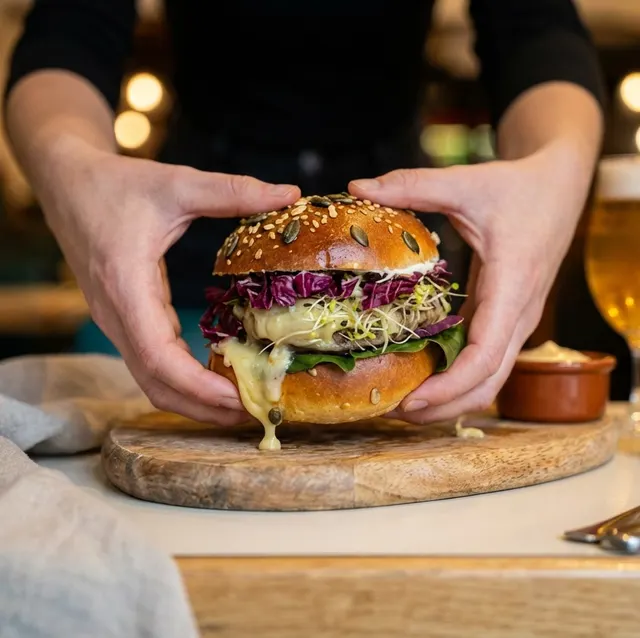
Research into online food imagery has examined how visual characteristics can influence these imagined sensory responses.
Studies have found that characteristics such as color saturation and visual presentation can affect consumers' responses to online food images and, under certain conditions, their purchase intentions.
Other research has explored how different styles of food imagery, such as showing the process behind food versus only the finished result, can influence perceived food quality and purchase intention.
The broader implication is important: food photography doesn't merely document a product. It helps create expectations about the experience of consuming it.
That makes visual presentation powerful.
It also makes accuracy important.
3. Photos make menus easier to scan
Online customers often make decisions quickly.
They scroll. They compare. They move between restaurants. They open menus containing dozens of items.
A photograph acts as a visual shortcut.
Instead of reading every menu description, customers can use images to identify dishes that immediately interest them.
This is particularly relevant on mobile devices, where customers interact with relatively small screens.
A clear photograph can communicate the basic identity of a dish in seconds.
This doesn't mean every menu needs to become a wall of images.
It means photographs can help create visual anchors that make a large menu easier to navigate.
4. Photos can make unfamiliar dishes more approachable
Consider a customer exploring a cuisine they don't know well.
A menu filled with unfamiliar dish names creates uncertainty.
Should they order something new? Or choose the one item they already recognize?
Photography can reduce that barrier.
Showing what an unfamiliar dish looks like can make experimentation feel less risky.
The customer may not know the name.
But they can see a grilled protein, a bowl of noodles, a rich sauce, fresh vegetables, a particular style of presentation.
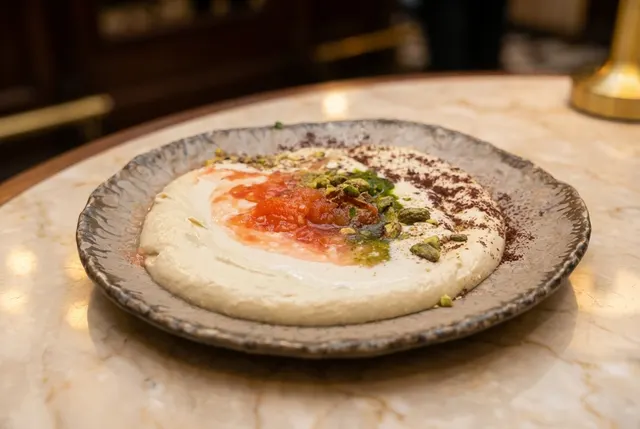
This visual information can help customers understand the dish before reading every detail.
For restaurants serving regional, international, or less familiar cuisines, photography may therefore play an additional educational role.
Does Every Menu Item Need a Photo?
Not necessarily.
There are two different questions: does photography help customers? And: should every single item have a photograph?
The answers aren't always identical.
On a delivery platform, extensive photo coverage can be valuable because customers are choosing individual products remotely.
DoorDash's internal data suggests that broader menu-photo coverage is associated with stronger sales performance.
But different restaurant contexts require different strategies.
A fast-casual restaurant selling burgers, bowls, pizzas, or desserts may benefit from photographing a large percentage of the menu.
A fine-dining restaurant with a frequently changing tasting menu may use photography differently.
A café may prioritize:
- Bestselling dishes
- Signature items
- Seasonal products
- High-margin items
- Products customers may not immediately understand
The objective shouldn't necessarily be: photograph everything because more photos must always be better.
A better question is: where does photography provide the most useful information to the customer?
Start there.
Which Menu Items Should Restaurants Photograph First?
If you don't have the time or budget to photograph your entire menu, prioritize strategically.
1. Bestsellers
Your most popular dishes already have demonstrated demand.
Strong photography can make them easier for new customers to discover.
2. Signature dishes
These are the items that define your restaurant.
If someone sees only five photographs from your menu, your signature dishes should probably be among them.
3. High-margin items
Photography can be used strategically to draw attention toward dishes that contribute more strongly to profitability.
This should still be balanced with customer relevance and menu design.
4. Unfamiliar dishes
If the name alone doesn't explain what the customer will receive, photography can reduce uncertainty.
5. Visually distinctive dishes
Some food naturally attracts attention: color, texture, layers, presentation.
These dishes can become visual anchors within a digital menu.
6. New menu items
A new dish has no existing customer familiarity.
A strong photograph can help introduce it.
Food Photos and Purchase Intention: What Academic Research Tells Us
Academic research in hospitality and consumer behavior provides useful context for understanding why menu photography matters.
One study examining pictures and food names found that adding pictures could positively affect consumer attitudes toward menu items, willingness to pay, and purchase intentions, although the effect depended on factors including the type of food name and the consumer's information-processing style.
This suggests that photography does not operate independently.
The image interacts with:
- The name
- The description
- The customer's familiarity with the dish
- The context
- The way information is presented
Other research has examined different types of online food photography.
For example, research comparing process-focused and outcome-focused food photos in online reviews found that process-focused imagery could produce stronger purchase intentions through higher perceived food quality and experiential value.
Research into color saturation has also explored how more saturated food imagery can influence purchase intention by affecting visual taste imagery, the process through which seeing food can encourage people to imagine its sensory qualities.
More recent research has examined static versus dynamic food imagery in digital menus, suggesting that how food is visually presented, not merely whether an image exists, can affect consumers' evaluations and purchase intentions.
Taken together, the research points toward a broader conclusion: the effectiveness of food photography depends on what the image communicates and how the customer interprets it.
The photograph itself is only one part of the decision.
Good Photography vs. Any Photography
This distinction is critical.
If food photos can influence customer decisions, does that mean any photograph is better than no photograph?
Not necessarily.
A poor image can communicate negative information just as quickly as a good image communicates positive information.
Consider a photograph that is:
- Dark
- Blurry
- Poorly cropped
- Oversaturated
- Visually cluttered
- Outdated
- Unrepresentative of the real dish
The customer may interpret the image as information about the food itself.
Poor lighting can make fresh ingredients look dull.
Incorrect white balance can make meat or sauces appear unnatural.
A messy background can make the presentation feel careless.
A heavily edited photograph can reduce trust if the actual dish looks completely different.
The relevant comparison is therefore not simply: photo vs. no photo.
Restaurants should also consider: useful photo vs. unhelpful photo. Accurate photo vs. misleading photo. Consistent photo library vs. visually fragmented menu.
Quality matters.
But "quality" does not necessarily mean expensive equipment or a large production budget.
A clear, well-lit smartphone photograph of the real dish may be more useful than an elaborate photograph that doesn't accurately represent what the customer receives.
Can Better Food Photos Increase Conversion Rates?
Potentially, but restaurants should be careful with universal conversion claims.
You may encounter statements online such as: "Professional food photography increases orders by 30%." Or: "Restaurants with photos increase conversions by 25%."
These claims are often repeated without clear links to original research.
That makes them difficult to verify.
There is credible evidence showing relationships between menu photography, purchase intention, consumer attitudes, and sales performance.
DoorDash's internal merchant data, for example, reports substantial differences in sales between merchants with stronger photo coverage and those with fewer or no photos.
But this doesn't mean every restaurant should expect an identical percentage increase.
Performance depends on many variables:
- Restaurant category
- Cuisine
- Price
- Ratings
- Reviews
- Delivery fees
- Location
- Competition
- Menu structure
- Promotions
- Photography quality
- Existing brand awareness
Photography is one variable within a much larger system.
A better way to think about it is: food photography can remove friction from the ordering decision.
It can help customers understand the product, evaluate alternatives, discover unfamiliar dishes, imagine the eating experience, and feel more confident about what they are ordering.
When those improvements occur at scale across a digital menu, they can contribute to stronger commercial performance.
Where Do Food Photos Matter Most?
Photography doesn't play exactly the same role on every channel.
Delivery apps
On platforms such as Uber Eats, Deliveroo, DoorDash, Glovo, and Just Eat, photography helps customers evaluate individual products.
The priority is usually: clarity + accuracy + appetite appeal.
Customers need to understand what they're ordering quickly.
For detailed guidance, see our Food Delivery App Photo Requirements: Uber Eats, Deliveroo, DoorDash, Glovo & Just Eat Compared guide.
Restaurant websites
Website photography has a broader role.
It can communicate:
- Food
- Interior
- Atmosphere
- Brand identity
- Service style
- Price positioning
Here, the objective isn't only to sell an individual dish.
It's to sell the restaurant experience.
Google Business Profile
Customers researching restaurants on Google may compare several options before choosing where to eat.
Images can help them understand:
- What the food looks like
- What the restaurant looks like
- Whether the atmosphere matches the occasion
Food photography therefore works alongside interior and exterior photography.
Social media
On social platforms, photography can serve several functions simultaneously:
- Discovery
- Brand building
- Product promotion
- Community engagement
- Visual storytelling
A highly controlled menu photograph and a spontaneous behind-the-scenes image can both be valuable, but for different reasons.
Should Restaurant Photos Look Perfect?
Not necessarily.
They should look good.
But "perfect" can create its own problems.
Customers increasingly encounter highly polished, edited, and AI-generated imagery online.
This creates a tension for restaurants.
Better presentation can attract attention.
But excessive perfection can reduce credibility.
If the photograph looks dramatically different from the food that arrives, the image has failed, even if it generated the initial order.
The customer experience doesn't end at conversion.
It continues when the customer opens the delivery bag or receives the plate.
That means restaurant photography should balance two goals: make the food look desirable. And keep the expectation realistic.
The strongest restaurant photography does both.
What About AI Food Photography?
AI introduces a new dimension to this discussion.
Restaurants can now use AI-assisted tools to:
- Improve lighting
- Clean backgrounds
- Adjust composition
- Create more consistent visual environments
- Increase image quality
- Adapt existing photographs
This can make high-quality visual content more accessible, particularly for restaurants that cannot organize frequent professional photoshoots.
But the same principle still applies: the image should accurately represent the food being sold.
There is an important difference between improving a photograph of your real pasta dish, and generating a completely fictional pasta dish that happens to look more attractive.
The first can improve presentation.
The second can create a mismatch between expectation and reality.
For restaurants exploring these tools, the objective shouldn't be to generate the most visually impressive food imaginable.
It should be to create better visual communication around the food the restaurant actually serves.
For a detailed explanation, read our AI Food Photography for Restaurants: Complete Guide.
How Restaurants Can Measure Whether Better Photos Increase Orders
Industry studies are useful.
But the most relevant data for your restaurant is your own.
If you want to understand whether photography affects performance, treat it as a measurable experiment.
Step 1: Establish a baseline
Before changing your photography, record available performance metrics.
Depending on the platform, this might include:
- Menu views
- Item views
- Conversion rate
- Number of orders
- Revenue
- Average order value
- Item-level sales
Step 2: Select a group of dishes
Choose menu items with sufficient sales volume.
Avoid changing everything simultaneously if you want to understand what caused the result.
Step 3: Improve the photography
Create clearer, more consistent images.
Keep the dish itself accurate.
Step 4: Avoid changing too many other variables
If you simultaneously change the photograph, reduce the price, launch a promotion, and rewrite the description, you won't know which change affected performance.
Step 5: Compare performance
Monitor results over a meaningful period.
Look for changes in:
- Item sales
- Conversion
- Product mix
Step 6: Expand what works
If dishes with improved photography consistently perform better, apply the same approach to more of the menu.
This turns photography from a subjective branding decision into something that can be evaluated as part of menu optimization.
A Practical Restaurant Photo Strategy
The research and industry data point toward a relatively simple strategy.
First: Build photo coverage
Start with the dishes where photography provides the most value:
- Bestsellers
- Signature dishes
- High-margin products
- Unfamiliar dishes
- New menu items
Second: Prioritize accuracy
Make sure customers can trust what they see.
Third: Improve quality
Focus on:
- Lighting
- Composition
- Camera angle
- Background
- Color
You don't necessarily need professional equipment.
For practical guidance, read How to Take Professional Food Photos With Your Phone.
Fourth: Adapt images to the channel
A delivery menu image and an Instagram photograph don't necessarily need the same composition.
Create a high-quality master image and adapt it for different platforms.
Fifth: Measure results
Use your own sales and menu data wherever possible.
Don't assume that a general industry statistic predicts exactly what will happen in your restaurant.
Frequently Asked Questions
Do food photos increase restaurant sales?
Research and industry data suggest that food photography can positively influence purchase intention and is associated with stronger restaurant sales in some contexts.
For example, DoorDash has reported substantially higher sales among merchants with stronger menu-photo coverage in its internal data.
However, results vary between restaurants, and photography is only one of many factors influencing sales.
Do menu photos make people more likely to order?
Academic research suggests that adding food imagery can positively influence attitudes toward menu items, willingness to pay, and purchase intentions under certain conditions.
The effect can depend on factors such as the dish, its name, the photograph, and the consumer.
How much can food photography increase restaurant sales?
There is no universal percentage.
DoorDash has reported that menus with item photos saw up to 44% higher monthly sales in one internal analysis of more than 15,000 local small-business merchants.
This should not be interpreted as a guarantee that adding photographs will increase every restaurant's sales by 44%.
Restaurant performance depends on many additional factors.
Should every restaurant menu item have a photo?
Not necessarily, although broad photo coverage can be particularly useful on delivery platforms.
If resources are limited, restaurants can start by photographing bestselling dishes, signature items, high-margin products, unfamiliar dishes, and new menu items.
Are professional food photos better than smartphone photos?
Professional photography can provide greater control over lighting, styling, equipment, and post-production.
However, modern smartphones can produce excellent restaurant photography when used correctly.
The quality and usefulness of the image matter more than simply which camera was used.
Can restaurants use AI-generated food photos?
Restaurants should distinguish between AI-enhanced photography and fully generated food imagery.
Using AI to improve a photograph of the real dish can help with presentation and consistency.
Generating a fictional dish that doesn't accurately represent what customers receive can create misleading expectations.
Always check the current rules of the platform where the image will be published.
What makes a good restaurant food photo?
A strong restaurant food photograph should be:
- Clear
- Well-lit
- Properly focused
- Appropriately composed
- Visually appealing
- Consistent with the restaurant's brand
- Accurate to the real dish
The objective is not simply to create a beautiful image.
It is to help customers understand and desire the food they can actually order.
The Bottom Line: Food Photography Is Part of the Ordering Experience
So, do food photos increase restaurant orders?
The evidence suggests they can.
Academic research shows that food imagery can influence attitudes, perceived quality, willingness to pay, and purchase intentions under certain conditions.
Industry data from delivery platforms also shows a strong relationship between menu-photo coverage and sales performance.
But the conclusion shouldn't be: more photos automatically equal more sales.
The more useful conclusion is: better visual information can make it easier for customers to understand, evaluate, and choose food.
For restaurants, photography is therefore not simply decoration.
It is part of the menu.
And increasingly, it is part of the ordering experience itself.
The strongest approach combines:
Real food
↓
Clear photography
↓
Accurate representation
↓
Consistent visual presentation
↓
Channel-specific optimization
↓
Measurement
Better photography won't fix a bad product, poor service, or an uncompetitive offer.
But when the food is good, photography can help customers see why they should order it.
If you want to improve the images you already have, start with our How to Take Professional Food Photos With Your Phone guide.
To understand how artificial intelligence can help restaurants create and scale visual content, read our Complete Guide to AI Food Photography for Restaurants.
And if your priority is delivery, see our comparison of Photo Requirements for Uber Eats, Deliveroo, DoorDash, Glovo, and Just Eat.
