food photography cost · restaurant food photography cost · food photographer prices · how much does food photography cost
Food Photography Cost: Restaurant Photography Prices in 2026
Learn how much restaurant food photography costs in 2026. Compare photographer prices, understand pricing factors and discover when AI can reduce costs.
If you've started looking for a food photographer, you've probably noticed something confusing almost immediately.
One photographer advertises restaurant photography starting at $250, while another quotes $3,000 for what appears to be the exact same service. Search a little longer and you'll find agencies charging more than $10,000 for commercial food photography.
So who's right?
The answer is that they probably all are.
Unlike products with fixed prices, professional food photography isn't a standard service. Every project is different. A local café that needs six photographs for its Google Business Profile has very different requirements from a restaurant group launching a seasonal campaign across multiple locations.
The photographer, the number of dishes, the intended use of the images, the location, food styling, editing, licensing rights, production team and even the city where the shoot takes place can all influence the final cost.
This is why comparing food photography quotes often feels impossible. Two photographers may both describe themselves as "restaurant photographers," yet they may be offering completely different services.
For restaurant owners, this creates another problem.
It's surprisingly easy to spend too much on photography that doesn't match your needs — or choose the cheapest quote only to discover later that important services weren't included.
The goal isn't to find the lowest price.
The goal is to understand what you're actually paying for and whether that investment will generate value for your restaurant.
In this guide, we'll break down how restaurant food photography is priced, what affects the cost, when hiring a professional photographer is worth the investment, and when newer workflows — such as AI-assisted food photography — may offer a more efficient solution.
Whether you're opening your first café, refreshing your delivery menu or planning a complete restaurant rebrand, this guide will help you make a more informed decision.
Why Food Photography Prices Vary So Much
One of the biggest misconceptions about restaurant photography is that photographers charge wildly different prices for the same job.
In reality, they're usually pricing entirely different projects.
Imagine asking three construction companies how much it costs to build a house.
One imagines a small holiday cabin.
Another imagines a modern family home.
The third assumes you're building a luxury villa with custom interiors.
All three provide different quotes because they're solving different problems.
Food photography works the same way.
A freelance photographer spending three hours photographing ten menu items at a neighbourhood café is providing a completely different service from a commercial production company creating imagery for an international restaurant chain.
The second project may include:
- Creative direction
- Art direction
- Food stylist
- Prop stylist
- Production manager
- Photography assistants
- Professional lighting equipment
- Commercial retouching
- Image licensing
- Multiple shooting days
Meanwhile, the smaller project may simply involve one photographer, one camera, natural light and basic editing.
Both projects involve photographing food.
Only one is a commercial production.
This is why asking "How much does food photography cost?" without defining the project rarely produces a useful answer.
A better question is: what type of restaurant photography does my business actually need?
Once you answer that, pricing becomes much easier to understand.
The Three Types of Restaurant Photography
Not every restaurant needs the same level of production.
Most projects fall into one of three categories.
Understanding where your business fits can save both money and time.
1. Menu Photography
This is the type of photography most independent restaurants need.
The objective is straightforward: create attractive, consistent photographs of real dishes for places where customers make purchasing decisions.
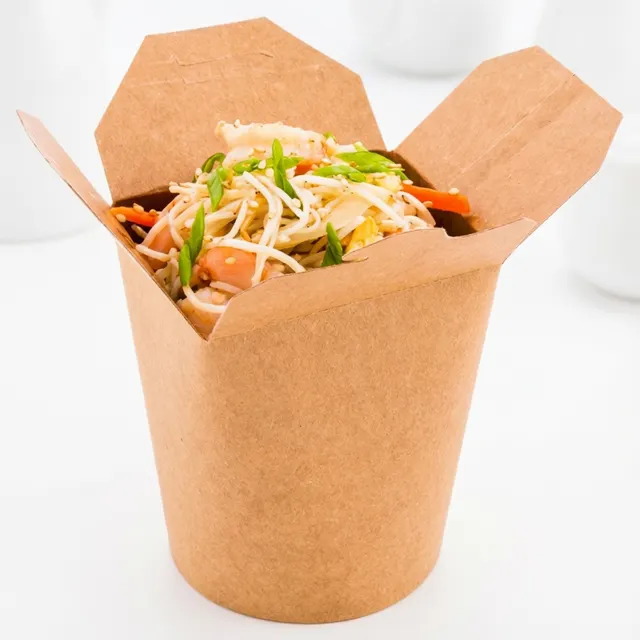
These images are commonly used on:
- Restaurant websites
- Google Business Profile
- Uber Eats
- Deliveroo
- DoorDash
- Glovo
- Just Eat
- Digital menus
- QR menus
The emphasis is usually on clarity, consistency and realism rather than elaborate creative concepts.
For many restaurants, this type of photography provides the highest return on investment because the images directly influence online ordering and menu browsing.
2. Brand Photography
Brand photography tells a much bigger story than simply showing individual dishes.
Instead of asking "What does this burger look like?", brand photography asks: "What does it feel like to visit this restaurant?"
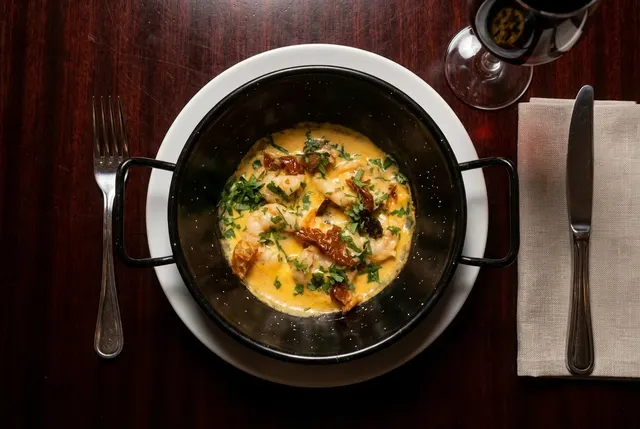
A typical brand shoot might include:
- Signature dishes
- Restaurant interior
- Exterior
- Kitchen
- Chef portraits
- Team portraits
- Lifestyle photography
- Guests interacting
- Cocktails
- Coffee preparation
- Ingredients
- Architectural details
These images become the foundation of the restaurant's identity.
They're used across websites, advertising campaigns, press releases, investor presentations, social media and printed materials.
Because they're expected to represent the business for years, they usually require significantly more planning than menu photography.
3. Commercial Advertising Photography
This is the highest level of food photography.
Commercial campaigns often involve advertising agencies, marketing departments, production companies and multiple creative specialists.
The objective isn't simply to photograph food. It's to sell an idea.
Lighting becomes more complex.
Food styling becomes more meticulous.
Images may require extensive post-production.
Some campaigns involve dozens of people working together to create a single hero image.
Unless you're working with a national chain or consumer food brand, this level of production is usually unnecessary.
How Much Does Restaurant Food Photography Cost?
There's no universal price for food photography.
However, understanding typical market ranges makes it much easier to evaluate quotations.
The following figures represent approximate professional pricing for independent restaurants in North America, the UK and much of Western Europe.
| Type of Project | Typical Price |
|---|---|
| Small menu update (5–10 dishes) | $250–700 |
| Half-day restaurant shoot | $600–1,500 |
| Full-day professional shoot | $1,500–3,500 |
| Premium commercial production | $3,500–10,000+ |
| National advertising campaign | $10,000+ |
These ranges should be viewed as guidelines rather than fixed industry prices.
Location has a significant influence.
For example, restaurant photography in London, New York or San Francisco is generally more expensive than photography in smaller cities due to higher operating costs and greater market demand.
Likewise, an experienced commercial food photographer with a strong portfolio will usually charge considerably more than someone who has recently entered the industry.
That doesn't automatically mean one photographer offers better value.
It depends entirely on your objectives.
A small café doesn't necessarily benefit from paying for an advertising-level production if the images are only being used on a delivery platform.
Conversely, a Michelin-starred restaurant launching a major rebrand may lose far more money by cutting corners on photography than by investing in it.
The question isn't whether the photographer is expensive.
The question is whether the production matches the importance of the project.
What Actually Determines the Price?
Many restaurant owners compare photography quotes by looking only at the total number at the bottom of the proposal.
That approach is understandable.
It's also one of the easiest ways to make the wrong decision.
Two photographers can charge exactly the same amount while delivering completely different services.
Understanding what's included is far more important than comparing prices alone.
Let's look at the factors that have the biggest impact on food photography costs.
1. Number of Dishes
The simplest variable is the amount of food that needs photographing.
A restaurant launching five new dishes requires a very different production from a business trying to photograph its entire 120-item menu.
Some photographers price per image.
Others charge per hour or per day.
Both models are common.
However, restaurants should always clarify exactly what they're receiving.
Important questions include:
- How many final edited images are included?
- Can multiple angles be photographed?
- Are additional edits charged separately?
- What happens if new dishes need photographing later?
The cheapest quotation sometimes includes surprisingly few final images.
2. Time Required
Photography is rarely just about pressing the shutter.
Before the first image is captured, the photographer often needs to:
- Walk through the restaurant
- Set up lighting
- Prepare shooting areas
- Test compositions
- Coordinate with kitchen staff
- Discuss priorities with the owner
A half-day shoot may comfortably cover ten carefully prepared dishes.
Attempting to photograph fifty dishes within the same timeframe usually produces rushed results.
Restaurants often underestimate how much preparation each image requires.
The best food photography looks effortless because a significant amount of work happens before each photograph is taken.
3. Food Styling
One of the biggest differences between menu photography and commercial advertising photography is food styling.
A food stylist isn't there to make fake food.
Their role is to ensure that real dishes look their absolute best under professional lighting.
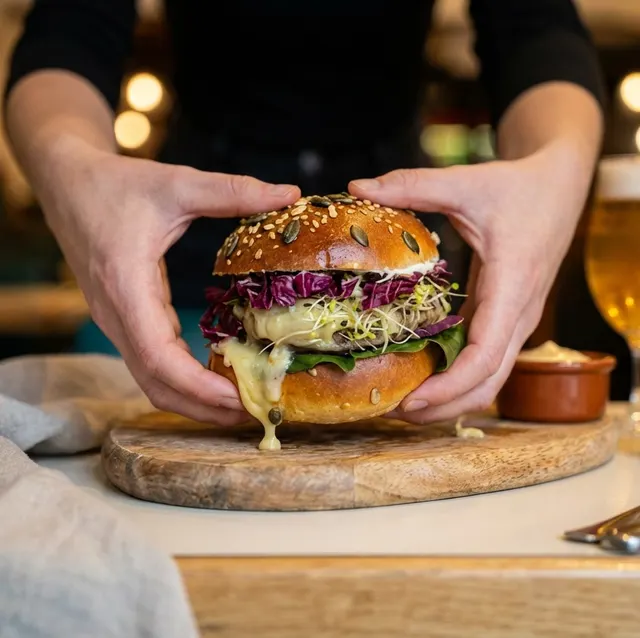
They may:
- Rearrange ingredients
- Replace wilted herbs
- Brush oils onto grilled meat
- Position garnishes
- Refresh sauces
- Maintain consistency between multiple takes
For advertising campaigns, this attention to detail is often essential.
For a local restaurant updating its Uber Eats menu, hiring a dedicated stylist may not always be necessary.
Choosing the appropriate level of production is often more important than choosing the most expensive one.
4. Editing and Post-Production
One of the biggest misconceptions about food photography is that the work ends when the last photograph is taken.
In reality, post-production is an essential part of professional food photography and often represents several additional hours of work.
After the shoot, photographers typically review hundreds of images before selecting the strongest ones. Those images are then professionally edited to ensure they look polished, consistent and ready for commercial use.
Depending on the project, editing may include:
- Color correction
- White balance adjustments
- Exposure balancing
- Contrast and tonal adjustments
- Lens corrections
- Dust and crumb removal
- Small food retouching
- Background cleanup
- Cropping for different platforms
- Exporting in multiple resolutions
Commercial campaigns often involve even more extensive retouching.
For example, reflections may be softened, distracting imperfections removed, steam enhanced, or multiple exposures combined into one final image.
The objective isn't to create fake food. It's to recreate what the dish looked like at its very best during the shoot.
Restaurants should always clarify what level of editing is included before accepting a quotation.
Some photographers include full post-production in their pricing.
Others charge separately based on the number of final images.
5. Image Licensing and Usage Rights
One cost that surprises many restaurant owners is image licensing.
When you hire a photographer, you aren't always purchasing full ownership of the images.
Instead, you're often purchasing the right to use those images under specific conditions.
For many local restaurants, the license simply allows unlimited commercial use across:
- Website
- Social media
- Google Business Profile
- Online menus
- Delivery platforms
- Printed menus
However, commercial advertising campaigns may require additional licensing.
For example, if a restaurant chain intends to use the photographs on national billboards, television advertising or international campaigns, the licensing agreement may be significantly different.
While licensing rarely becomes a major issue for small independent restaurants, it's worth discussing before the project begins.
Ask questions such as:
- Can we use the images forever?
- Are there geographic restrictions?
- Can we edit the images later?
- Can we give them to our marketing agency?
- Can franchise locations use the same photographs?
Understanding these rights now can prevent unexpected costs later.
6. Travel and Production Costs
Photography doesn't happen in isolation.
Sometimes the photographer needs to travel.
Sometimes equipment must be transported.
Sometimes an assistant is required.
These production costs are often listed separately from the photography fee itself.
Common additional expenses include:
- Travel mileage
- Accommodation
- Parking
- Equipment rental
- Studio rental
- Props
- Background surfaces
- Additional lighting
- Assistant fees
Not every project includes these costs.
But restaurants should ask whether the quotation is fully inclusive or whether additional expenses may appear after the shoot.
Hidden Costs Restaurants Often Forget
Many restaurant owners compare only the photographer's fee.
In reality, several smaller expenses can influence the overall budget.
Food Preparation
The kitchen often prepares more dishes than will actually be photographed.
Some dishes need to be remade several times during the shoot.
Others cool down under lighting and need replacing.
Ingredient costs should therefore be considered part of the production budget.
Staff Time
Photography rarely happens without involving the restaurant team.
Chefs prepare dishes.
Managers coordinate the schedule.
Servers may help during lifestyle photography.
The restaurant may even choose to close certain areas while photography is taking place.
Although these costs don't appear on the photographer's invoice, they still represent an investment.
Menu Changes
Restaurants change constantly.
Seasonal menus. New desserts. Limited editions. Holiday specials.
Every menu change potentially creates a need for new photography.
This is one reason why many restaurants no longer think of photography as a one-time expense.
Instead, they build an ongoing content strategy.
Should You Photograph Every Menu Item?
Surprisingly, the answer is often no.
Many restaurant owners assume every dish needs a professional photograph.
While this may seem logical, it isn't always the most effective use of the budget.
Instead, prioritize the dishes that have the greatest commercial impact.
These usually include:
- Signature dishes
- Best sellers
- High-margin products
- Seasonal specials
- New menu launches
- Delivery favourites
- Hero desserts
- Premium drinks
Customers rarely browse every item equally.
Most attention naturally goes to featured dishes and visual highlights.
Photographing these first often provides the highest return on investment.
The remaining menu can always be expanded later.
How to Compare Food Photography Quotes
Receiving three quotations doesn't automatically make choosing easier.
Restaurants often compare only the final number.
Instead, compare the scope of work.
A useful comparison table might include:
| Question | Photographer A | Photographer B | Photographer C |
|---|---|---|---|
| Number of edited images | |||
| Half day or full day | |||
| Editing included | |||
| Food styling included | |||
| Commercial usage included | |||
| Delivery platform versions | |||
| Website crops | |||
| Social media crops | |||
| Turnaround time | |||
| Travel included |
Looking beyond price often reveals that two similar quotations actually provide very different value.
Questions Every Restaurant Should Ask Before Hiring a Photographer
Choosing a photographer shouldn't feel like buying a commodity.
The right questions can tell you far more than the portfolio alone.
Before signing a contract, ask:
- How many edited photographs are included?
- How many dishes can realistically be photographed?
- Is food styling included?
- Will you photograph the restaurant interior?
- Can we also photograph our team?
- What happens if we need additional images later?
- How long does editing take?
- Are commercial usage rights included?
- Have you photographed restaurants similar to ours?
- Can you advise on which dishes should be prioritised?
A good photographer should be able to answer these questions clearly.
When Is Professional Food Photography Worth the Investment?
Professional photography delivers its greatest value when images become long-term business assets.
Restaurants launching a new concept often rely on photography for years.
The same images appear on:
- Website
- Google Business Profile
- Press articles
- Reservation platforms
- Delivery apps
- Printed menus
- Advertisements
Viewed this way, photography becomes far more than a marketing expense.
It becomes part of the restaurant's brand identity.
Investing in high-quality photography at the beginning often reduces the need for frequent rebranding later.
When AI Becomes a More Cost-Effective Solution
The restaurant industry has changed significantly over the last few years.
Menus change faster.
Seasonal offers appear more frequently.
Social media requires constant visual content.
Traditional photography wasn't designed for this pace.
Imagine a restaurant introducing three new dishes every month.
Hiring a professional photographer twelve times per year quickly becomes expensive.
Instead, many restaurants now use a hybrid workflow.
The restaurant photographs the real dishes using a consistent setup — sometimes with nothing more than a smartphone, natural lighting and a simple background.
AI-assisted editing is then used to improve:
- Background consistency
- Lighting
- Color balance
- Composition
- Overall presentation
The result isn't a replacement for professional photography.
It's a more scalable workflow.
Professional photography establishes the visual identity.
AI helps maintain it.
Professional Photography vs AI: Which Offers Better Value?
This isn't really a competition.
Both approaches solve different problems.
| Professional Photography | AI-Assisted Photography |
|---|---|
| Brand campaigns | Frequent menu updates |
| Restaurant interiors | Existing food photos |
| Hero images | Delivery menus |
| Team portraits | Social media content |
| Long-term branding | Seasonal dishes |
| High-end advertising | Large image libraries |
Many successful restaurants now combine both approaches.
A professional photoshoot creates the foundation.
AI helps keep that visual system updated throughout the year.
Three Real-World Scenarios
Independent Café
A café with twelve menu items wants to improve its Google Business Profile and website.
Rather than photographing every product, the owner selects six signature items, the coffee bar and the interior.
A half-day professional shoot provides enough content for the next year.
When seasonal drinks are introduced, staff photograph them in-house and use AI-assisted editing to match the existing visual style.
Fine Dining Restaurant
A Michelin-level restaurant is launching a new tasting menu.
Photography will appear in press articles, luxury magazines, reservation platforms and investor presentations.
Here, creative direction, lighting and styling become critical.
Professional photography delivers the greatest value.
Restaurant Chain
A chain with multiple locations updates its menu every season.
Organising new commercial shoots every few months becomes increasingly expensive.
Instead, the company commissions one professional production to establish the visual language.
Subsequent menu updates are photographed internally using standardised guidelines and enhanced with AI-assisted editing.
This keeps costs manageable while maintaining consistency across every location.
Common Mistakes Restaurants Make
Many businesses spend more than necessary simply because they approach photography without a strategy.
The most common mistakes include:
- Photographing the entire menu unnecessarily
- Choosing the cheapest photographer without comparing deliverables
- Forgetting about licensing rights
- Ignoring image consistency
- Failing to plan future menu updates
- Treating photography as a one-time task rather than an ongoing content system
Avoiding these mistakes usually delivers greater savings than negotiating a lower price.
Frequently Asked Questions
How much does food photography typically cost?
Professional restaurant food photography generally ranges from $250–700 for a small menu update to several thousand dollars for full commercial productions. The final price depends on the photographer, location, number of dishes and production requirements.
Do photographers charge per photo or per day?
Both pricing models are common. Some photographers charge by the number of finished images, while others charge by the hour, half-day or full day.
Is food styling included?
Sometimes. Commercial productions often include a dedicated food stylist, while smaller restaurant shoots may not.
Should every menu item be photographed?
Not necessarily. Most restaurants achieve better results by prioritising their signature dishes, best sellers and high-margin items before expanding their image library.
Can AI reduce photography costs?
Yes. AI-assisted editing can make ongoing menu updates more affordable by improving photographs of real dishes without organising a full professional production every time.
Final Thoughts
There isn't a single "correct" price for food photography because there isn't a single type of restaurant photography.
A neighbourhood café updating six menu items has completely different requirements from a restaurant group launching a nationwide campaign.
Rather than focusing exclusively on price, think about long-term value.
Ask yourself:
- How long will these images be used?
- Where will customers see them?
- How often does the menu change?
- Do we need a one-time photoshoot or an ongoing visual content strategy?
For many restaurants, the answer is no longer choosing between professional photography and AI.
It's understanding how each can be used most effectively.
Professional photography creates your visual identity.
AI helps you maintain it as your business evolves.
If you want to understand the technology in more detail, read our Complete Guide to AI Food Photography for Restaurants.
To decide which approach fits your restaurant, see AI Food Photography vs Professional Photography: Which Is Better?
If you're planning a full restaurant shoot, use our Restaurant Photography Checklist: Every Photo Your Restaurant Needs.
If you're creating source images yourself, see How to Take Professional Food Photos With Your Phone.
And to make your existing photos more consistent, read Food Photography Backgrounds: How to Choose the Right Background for Food Photos.
